

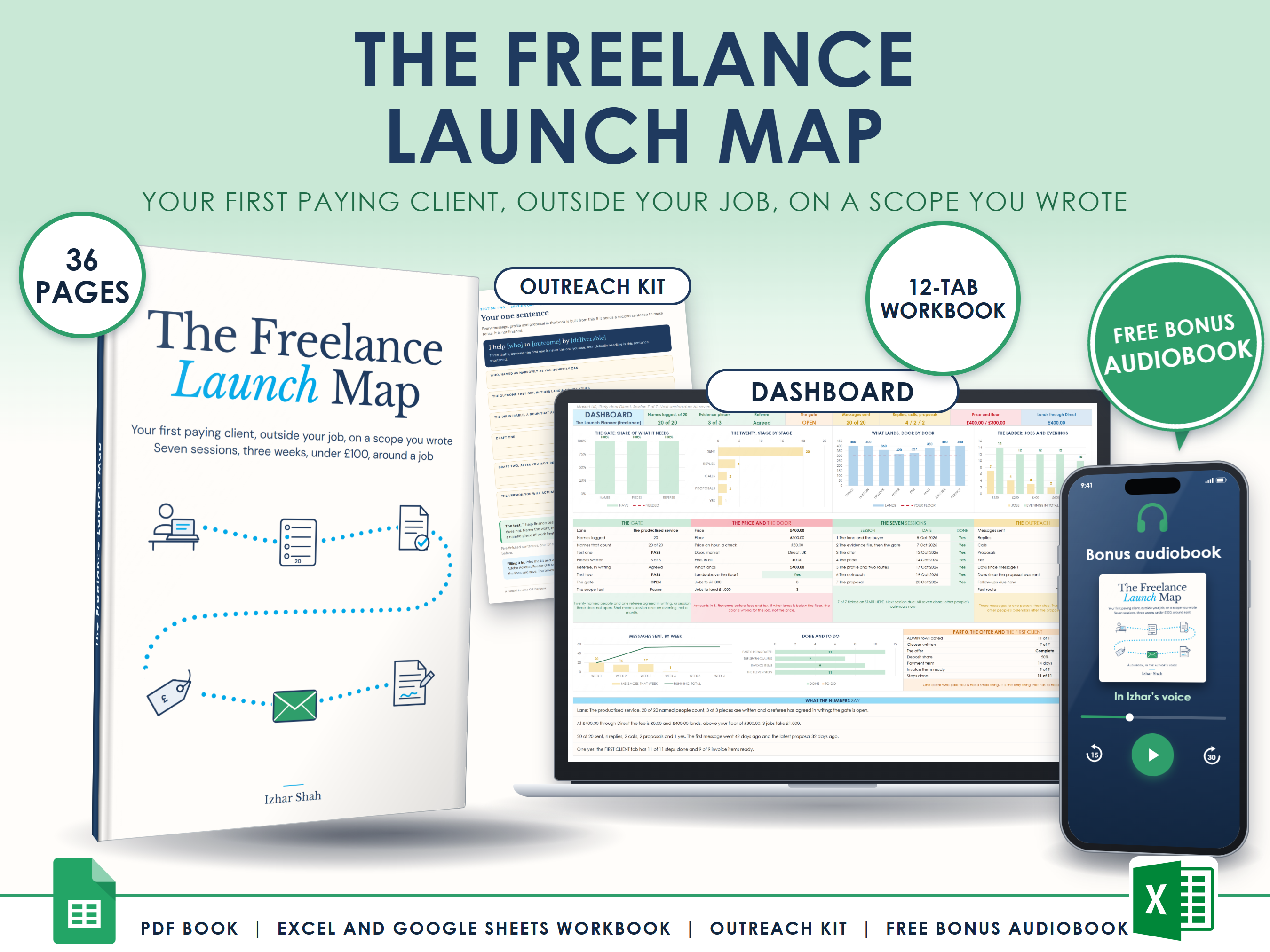
What you get
Three pieces and a bonus, one route from a job you already do to a client who pays for it
Not a course to watch. A map to walk in seven evenings, a workbook that counts the names and holds the gate, the messages and the proposal to copy, and the same text in your ears for the commute.
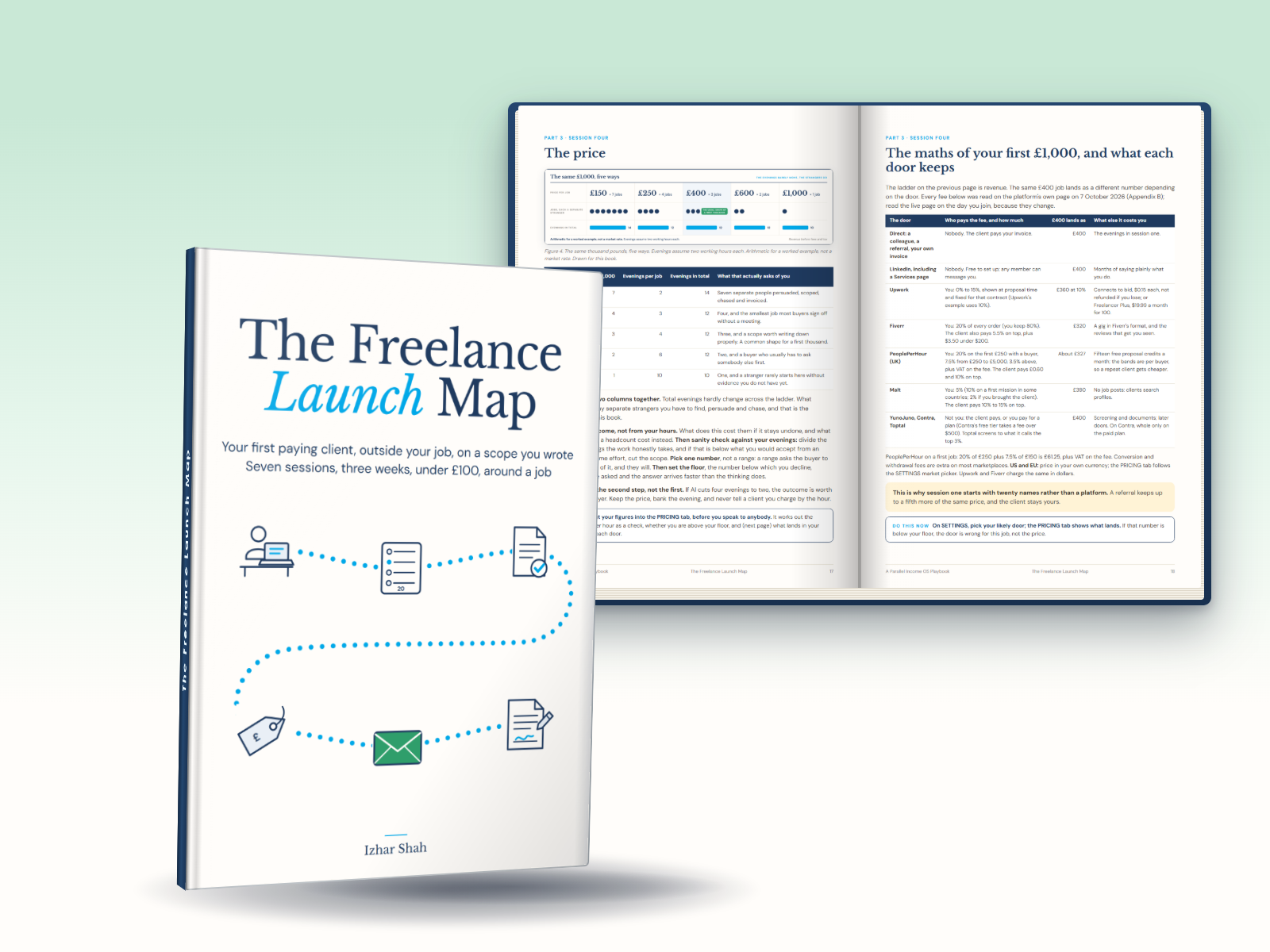
The book
The freelance launch map
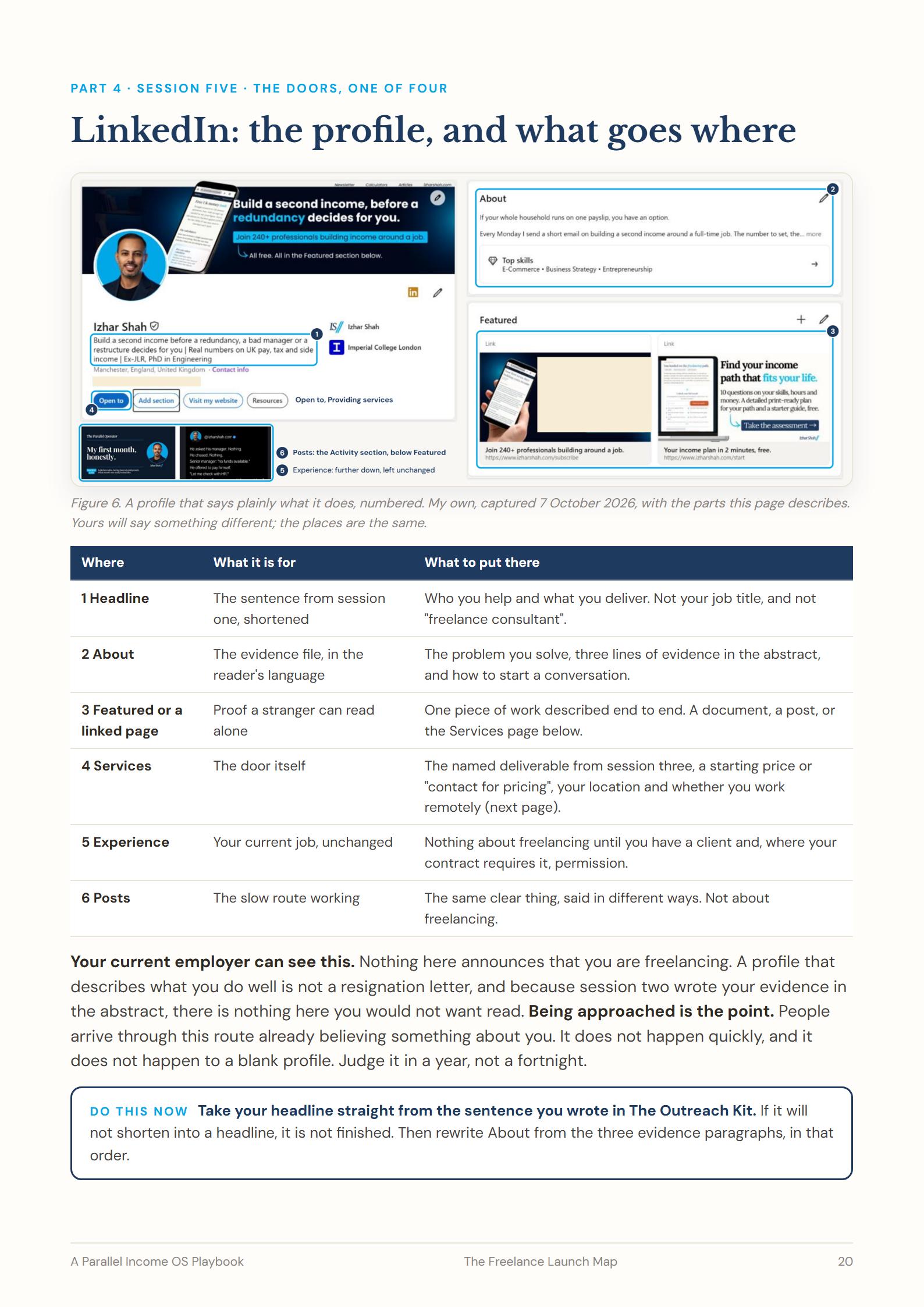
36 pages: the set-up before the first client (including the visa page nobody writes), the lane, twenty named people, three pages on what AI has done to freelance work and what still sells, the evidence file and the gate, one scope at one price, what each door keeps of a £400 job, LinkedIn and the marketplaces on real screens, the outreach, the proposal, the money.
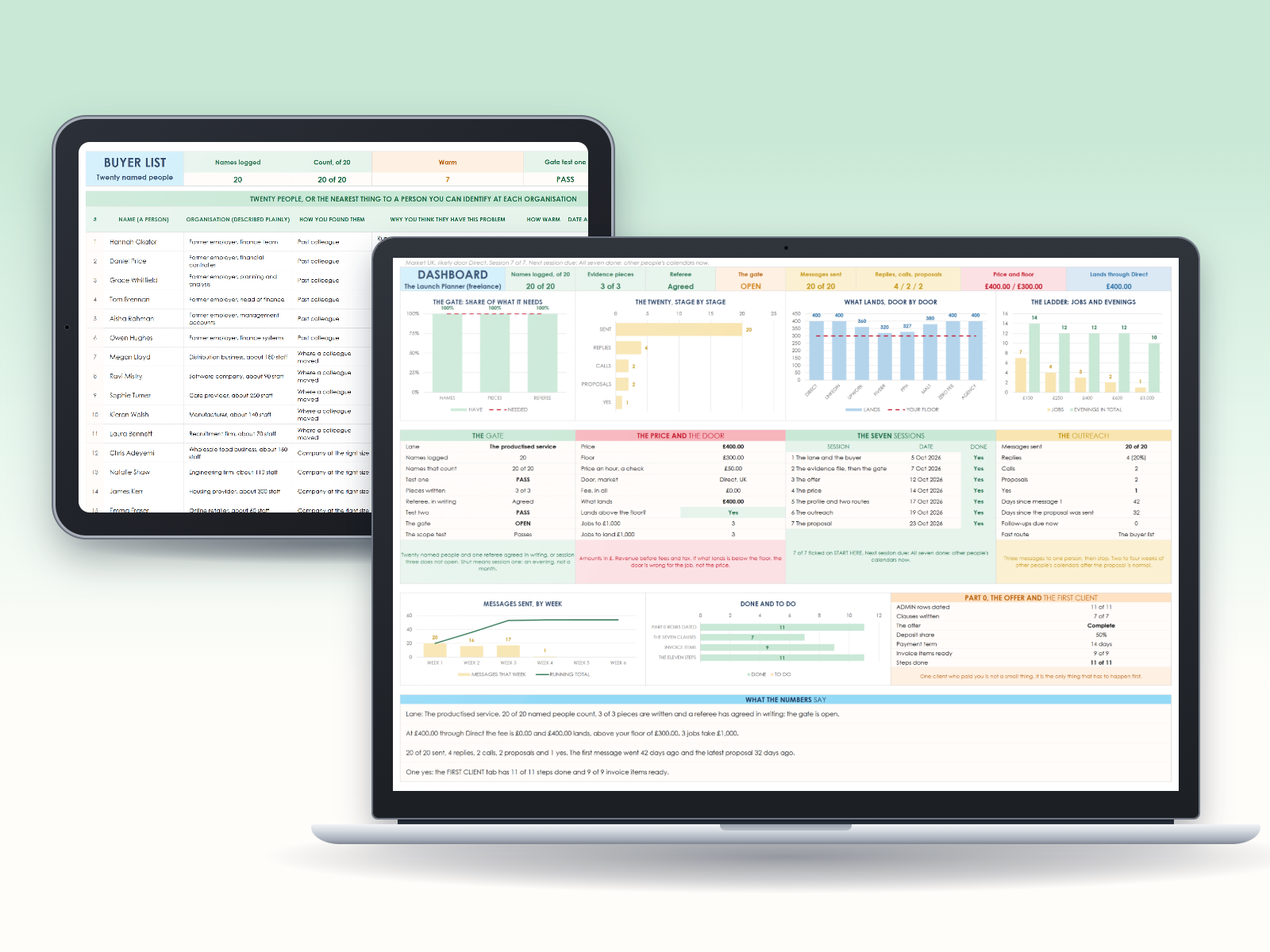
The workbook
The Launch Planner
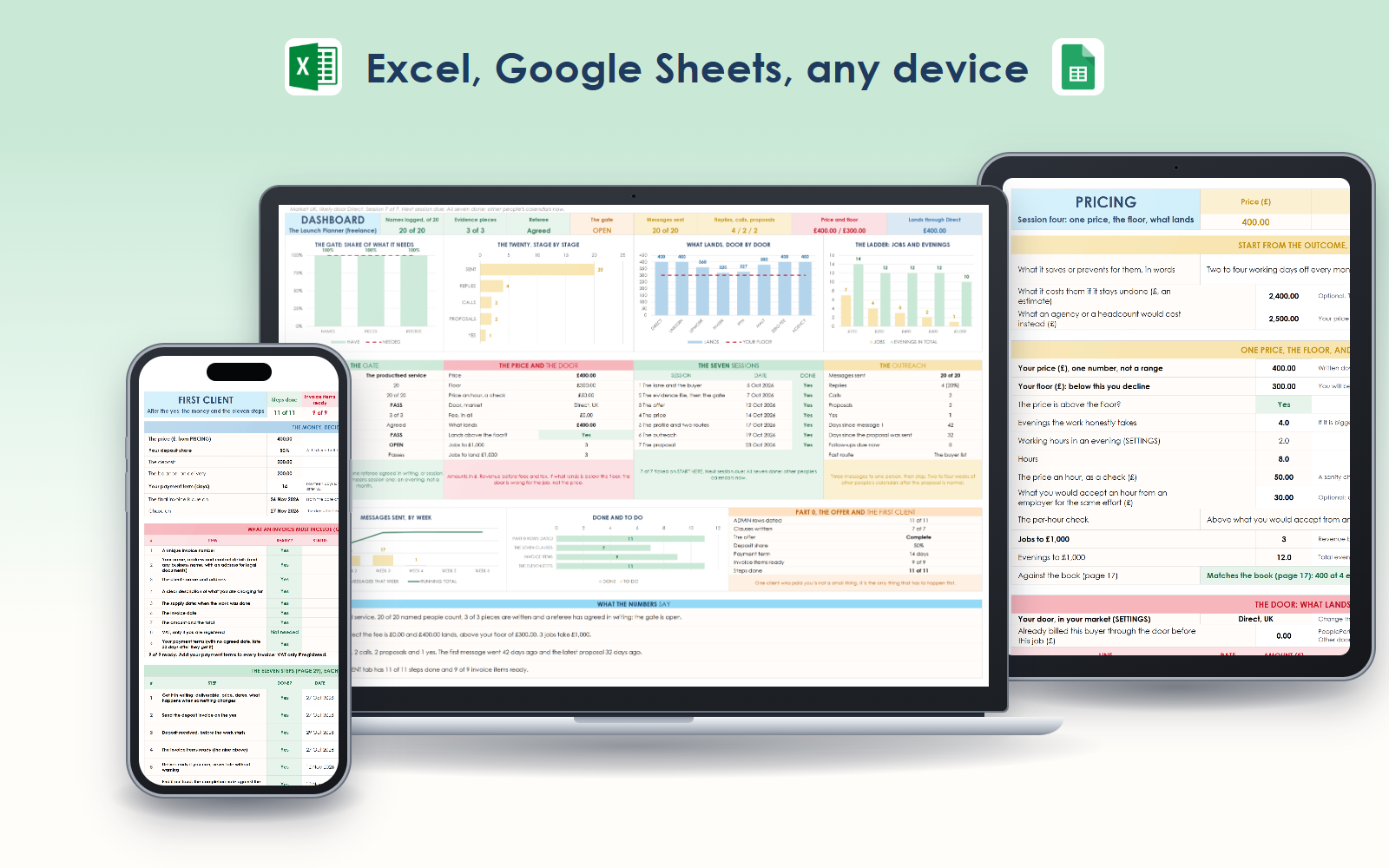
Name your lane, log twenty people and let the tab count them, record the evidence and the referee, write the seven clauses, price from the outcome with the floor and the per-hour check, see what lands through your door, track twenty messages and the proposal, and tick the first-client steps. Pick your market and door and the currency and fee line switch.
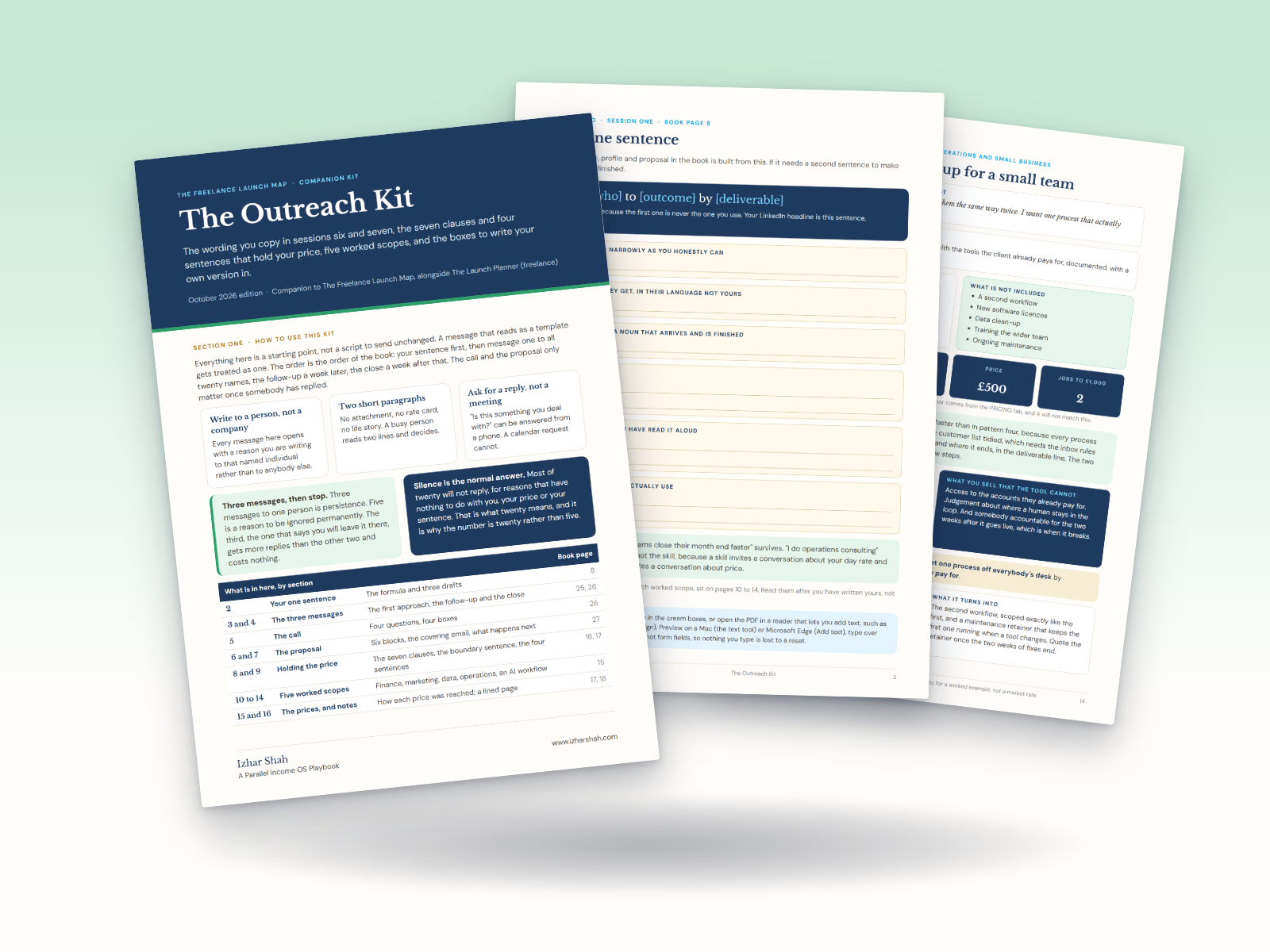
The kit
The Outreach Kit
Your one sentence with three drafts, the three messages, the call that is not a pitch, the two-page proposal skeleton, the covering email, the seven clauses every scope needs, the four sentences for a discount, a day rate, a range and one more small thing, and five worked scopes with prices, including one for setting up an AI workflow.
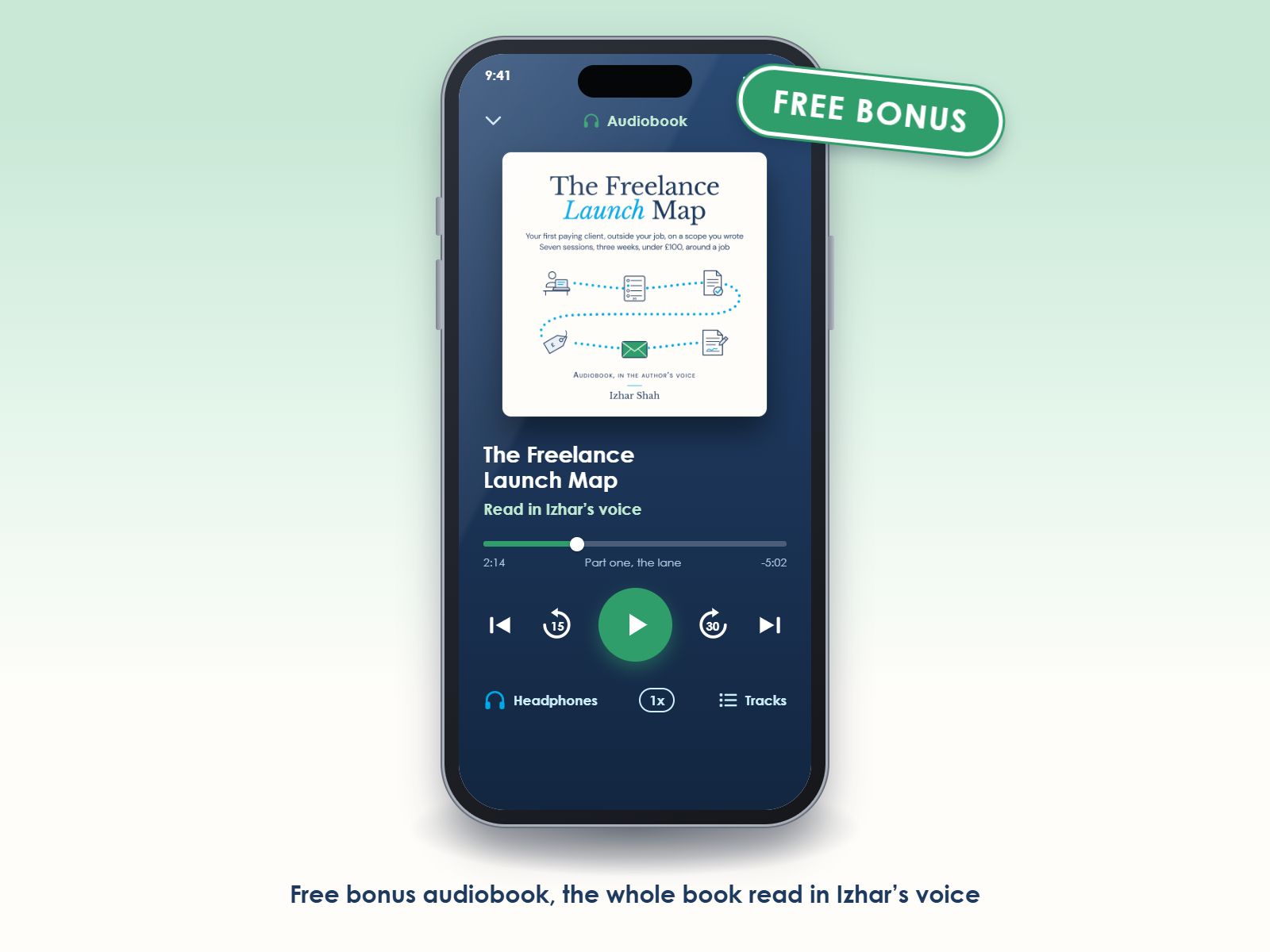
Free bonus
The audiobook, in Izhar's voice
The book in tracks that follow it in order, so the sessions can be heard on the way to work and done at the desk. Read in Izhar's voice through a professional voice model trained on his own recordings, then checked word for word against the book.
How it works
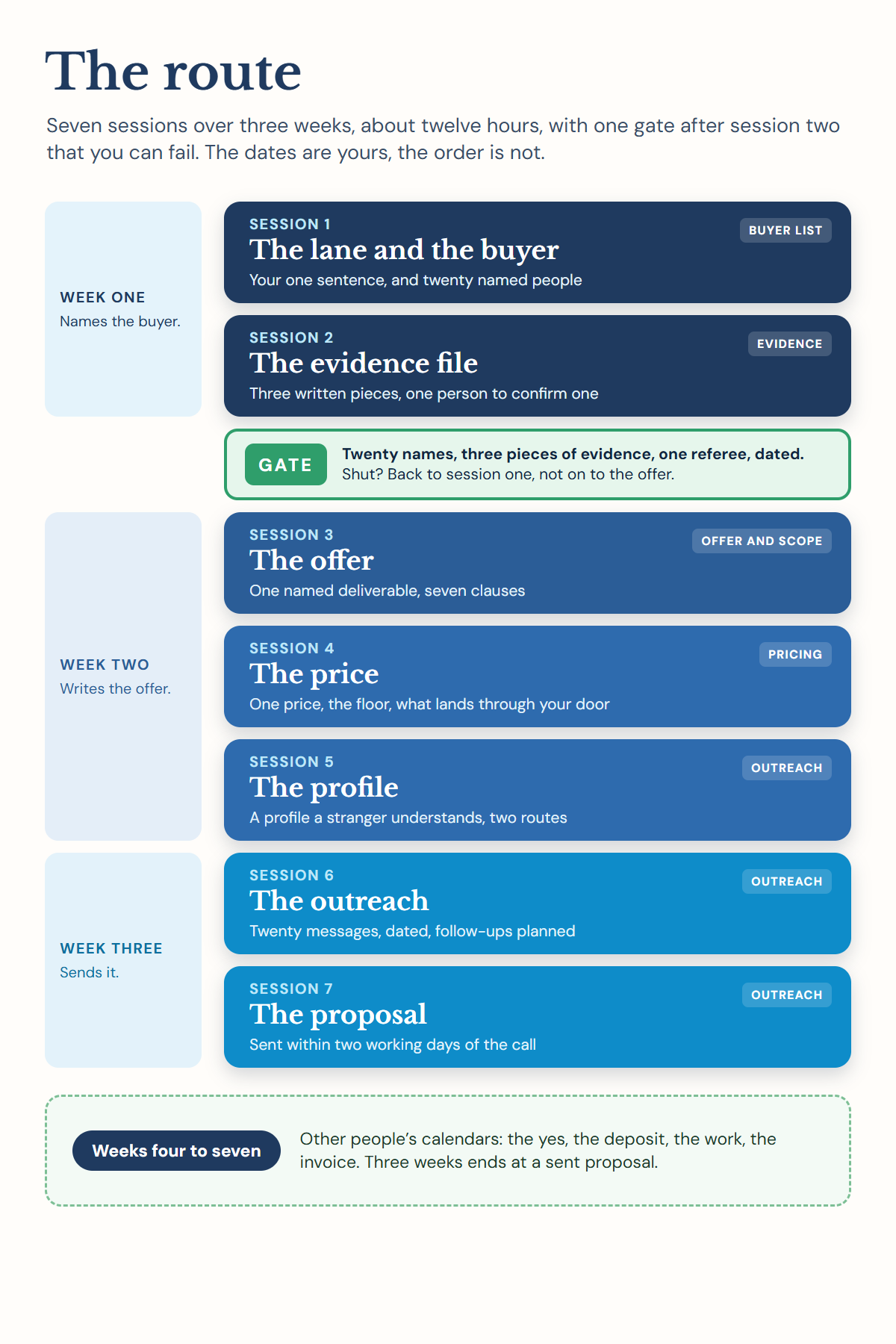
How to become a freelancer around a job, in seven sessions over three weeks
Seven evenings of one to two hours, about twelve hours, with a gate after session two you can fail. Fail it and you have lost an evening, not a month of outreach into nowhere.
- Choose the lane and name the buyer. Done for you, the productised service or consulting; one sentence; twenty named people, not a market.
- Build the evidence file. Three pieces of work described so an outsider can follow them, and one person who will confirm one. Then the gate.
- Write the offer. One named deliverable, one price, the seven clauses that make it a fixed price, and the scope test that keeps a chatbot out of it.
- Set the price. From the outcome, checked against your evenings, with the floor below which you decline, and what lands through each door.
- Get found. One fast route and one slow route; the profile a stranger understands in ten seconds; the Services page; the marketplaces as they really work.
- Send the twenty messages. Two paragraphs each, over three evenings, then two follow-ups and stop. Then the call that is not a pitch.
- Send the proposal. Two pages, six blocks, within two working days of the call. Then the agreement, the deposit and the invoice.
Inside the launch map
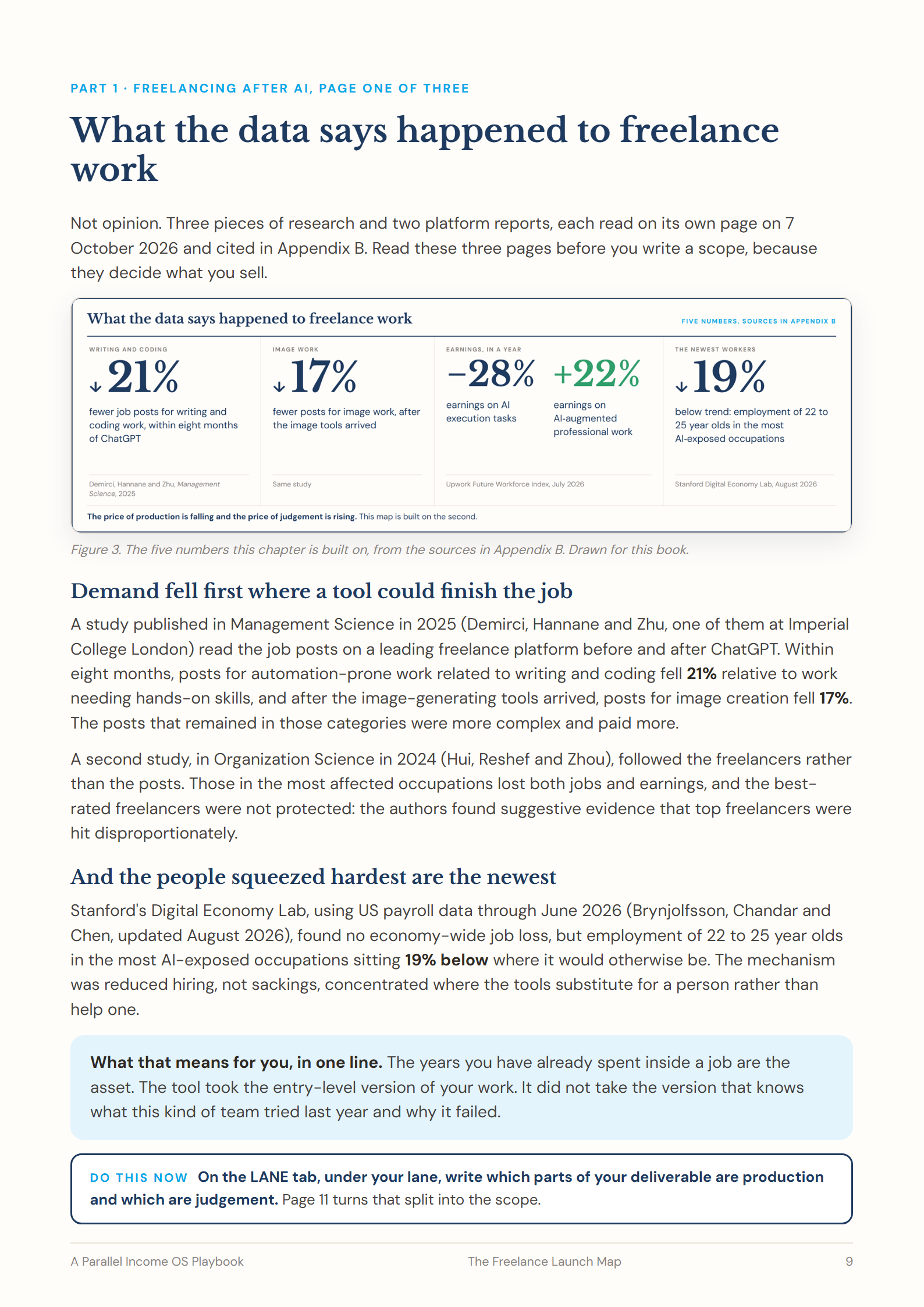
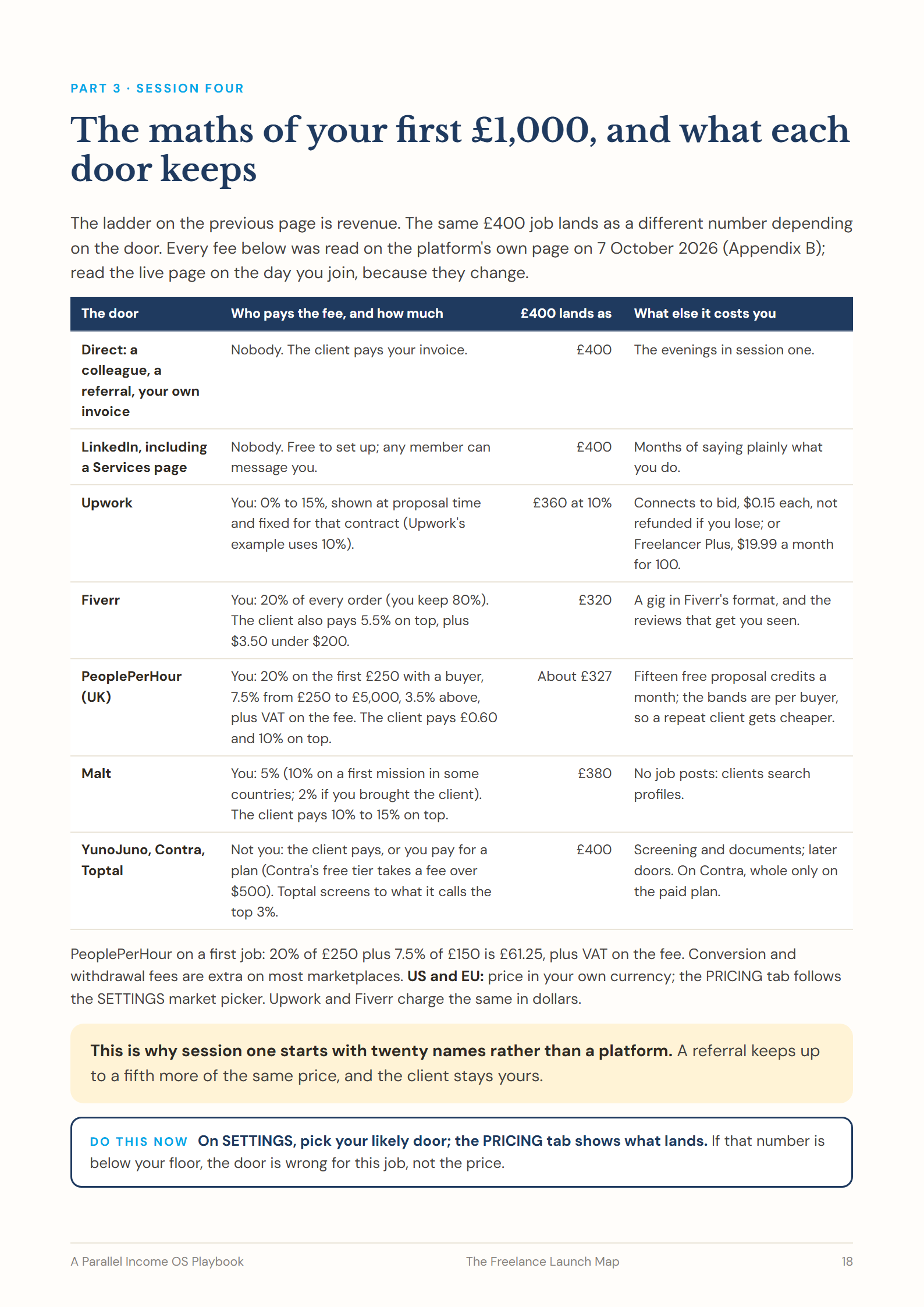
What AI did to freelance work, every fee dated, and the doors on real screens
Inside the workbook
Type your names. Read your answer.
Twelve tabs, protected so nothing breaks, with the typing cells left open. It ships with a DEMO twin holding the book's worked example (a management accountant, twenty names, a £400 scope, twenty messages, one yes) so every chart is alive on first open. The BUYER LIST tab counts to twenty and will not count a company as a person. The PRICING tab shows what lands through the door you pick, to the penny, and works out late-payment interest when you need it.
Opens in Excel, Numbers and LibreOffice. A one-click Google Sheets copy is on the Open me first page, so a Chromebook, a tablet or a phone works too.
The map, the workbook and the kit, with the audiobook as a free bonus.
£39one paymentBuy now- Lifetime access
- Future updates included
- Secure checkout
Before you buy
Who it is for, and what it is not
It is for you if you are
- Working full time. Seven evenings across three weeks, nothing in the daytime.
- Between jobs. The same seven sessions, run closer together.
- Outside the UK. US and EU boxes wherever the rules differ.
- Without a portfolio. The evidence file is built from work you did inside a job.
- Already paid once. Start at session two; the evidence file is now one paragraph longer.
Worth knowing first
- It sells your evenings. The fastest-paying path, and not a passive one.
- It is not a job board. It shows how the marketplaces work; the clients come from your own list first.
- It needs time, not money. About twelve hours and under £100, most of that only if a client asks for insurance.
- It is not a promise of income. Twenty messages produced four replies and one client in the worked example; yours will differ.
- It is dated on purpose. Every fee, rule and statistic carries the day it was read.
Who is behind it

Izhar Shah
My first money outside a payslip was consulting, in 2022, for a London company whose problem matched my research. It came through a channel that already trusted me, not through a pitch. Later I built an e-commerce brand around my job at Jaguar Land Rover, left in August 2025 once it covered my number, and watched it pass £500,000 in sales in its first twelve months. I teach the system, not the leap.
Before it: a factory floor, a lecturing post, a PhD in Engineering, research at Imperial College London, and a specialist role at JLR.
- March 2025the brand launched while I was still employed
- August 2025I left the job on a number I had set
- Twelve monthspast £500,000 in sales, built around a job first
Questions
The ones everyone asks
How do I become a freelancer in the UK with a full-time job?
Read your employment contract first (the book walks the three clauses), then run the seven sessions in your evenings: the lane, twenty named people, the evidence file, one scope at one price, the profile, the outreach and the proposal. Part 0 covers registering with HMRC, the £1,000 trading allowance, invoicing and the dates that are coming, and it has the page on visas that other guides skip.
I have no portfolio and no experience as a freelancer. Can I start?
Yes, if you have done the work inside a job. Session two builds the evidence file from three pieces of work described so an outsider can follow them, plus one person who will confirm one. A first client is not looking for a portfolio of freelance work; they are looking for proof that hiring you is not a gamble.
Has AI killed freelancing?
It killed the entry-level version of some of it. Three pages in the book read the research and the platforms' own 2026 reports: demand for writing, coding and image production fell within months of ChatGPT, earnings on AI execution tasks fell 28% in a year on the biggest marketplace, and AI-augmented professional work rose 22% in the same period. The method's answer is the scope test, the pricing rule and the disclosure line: sell judgement, accountability and access, use the tools to deliver faster, and price the outcome.
Which is better, Upwork, Fiverr or PeoplePerHour?
None of them is the first door. The book's doors table shows the same £400 job through each one with the fee read on the platform's own page on the day: Upwork's 0 to 15% fixed at proposal time, Fiverr's 20% and the client's 5.5% on top, PeoplePerHour's per-client bands, Malt, and the platforms that charge the client instead. Then it shows LinkedIn's Services page set up in ten minutes, and why twenty named people beat all of them for a first client.
How much should I charge?
From the outcome, not your hours. The book works five prices from £150 to £1,000 a job, shows that the evenings barely move while the number of strangers you must persuade does, and the PRICING tab checks your number against your floor and shows what lands through your door. The kit holds five worked scopes with their arithmetic. Every figure is a worked example, not a market rate.
Do I need a freelance contract template or an invoice template?
The kit holds the seven clauses every scope must contain, which is the agreement, and the two-page proposal that carries them. The money page lists what gov.uk says an invoice must include, as a tick list on the FIRST CLIENT tab, with the 30-day rule and statutory interest. The map does not include an invoice generator; it tells you what the invoice must say.
I am not in the UK. Does it still work?
Yes. The method is the same anywhere. The worked numbers are UK, and every page where the rule differs has a US box and an EU box: registering, what the client reports, invoicing, late payment, VAT on services to a business abroad, insurance, data, working through a company, and visas. Appendix A compares the three side by side, and the workbook's market picker changes the currency and the fee lines.
Excel or Google Sheets?
Both. The download holds the Excel file, and the Open me first page carries a one-click link that makes your own Google Sheets copy. The same formulas work in both, and the workbook also opens in Numbers and LibreOffice.
Is the audiobook extra?
No. It is a free bonus with the map: the book in tracks that follow it in order, plus one complete file for offline listening, in your library as its own item on the day you buy. It is worth £11 when purchased separately, and it comes free with the map.
Is the audiobook the author's real voice?
It is Izhar's voice, read through a professional voice model trained on his own recordings and checked word for word against the book.
How do I get the files, and how do I ask a question?
Straight after checkout you are in your library. Open the "Open me first" page, which takes two minutes, then the book. Nothing is posted. Questions go through the contact link inside your library, and I answer them myself.
One client who paid you is not a small thing.
It is the only thing that has to happen first, and the second one comes from the evidence the first one leaves behind. The map, the workbook and the kit, with the audiobook free.
£39one paymentBuy now- Lifetime access
- Future updates included
- Secure checkout