Every week of leave and what it pays, then the first year
Type your due date, your pay and any company maternity pay, and see every week of leave, the month money is tightest and what is still to buy. Excel and Google Sheets.
What you get
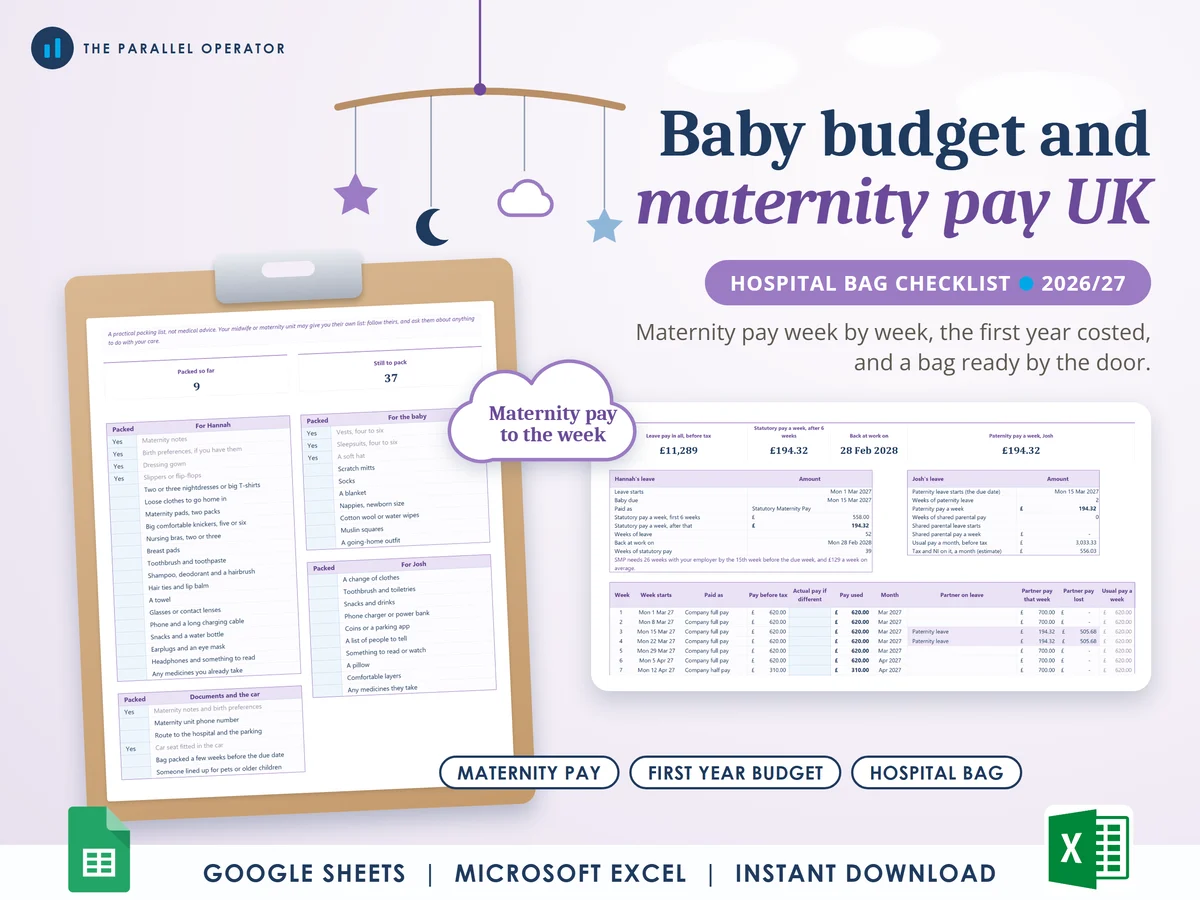
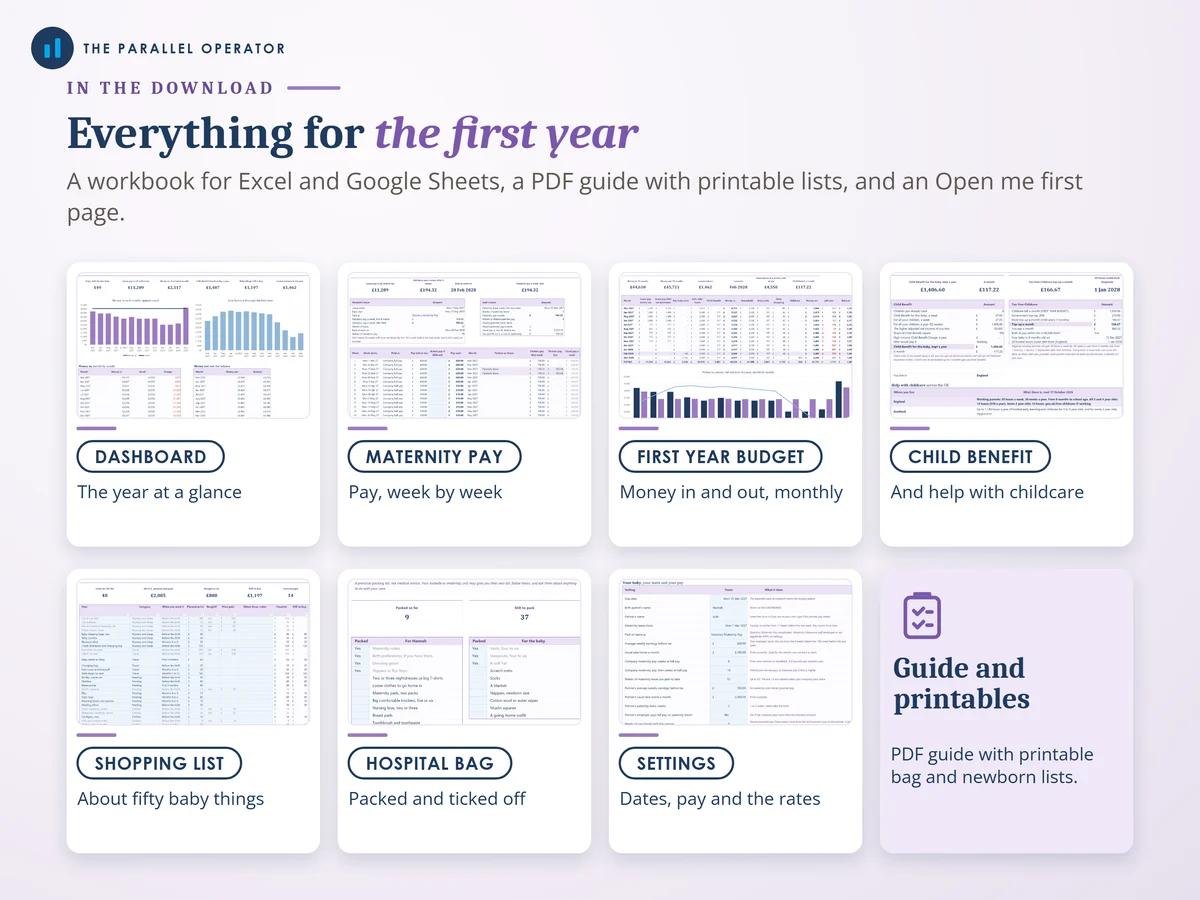
- Excel workbook, 8 tabs and 6 chartsStart here, Settings, Dashboard, Maternity pay, First year budget, Child benefit, Shopping list, Hospital bag
- Google Sheets versionA make-a-copy link puts it in your own Drive in one click
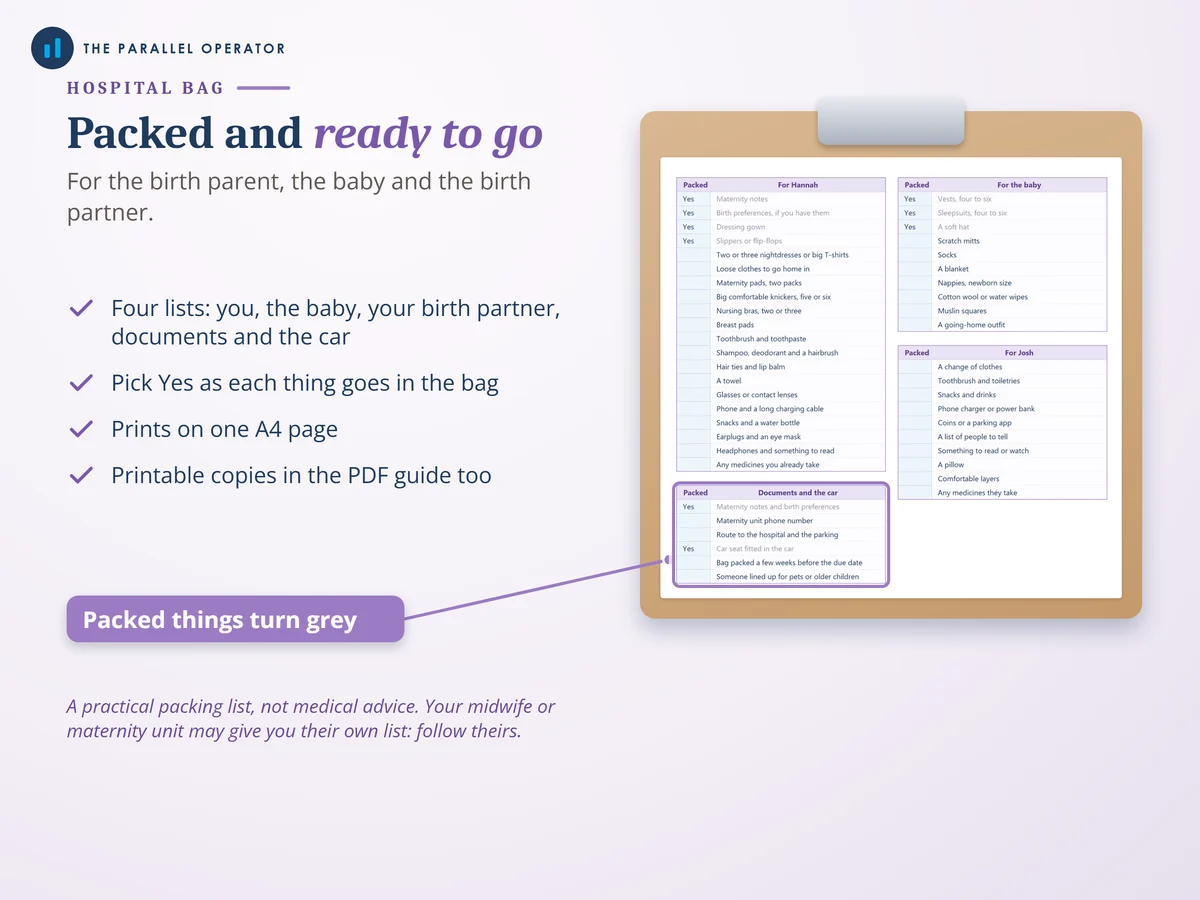
- 12 page PDFAn 8 page guide with a worked example, and three printable A4 checklists for the hospital bag and newborn essentials
- Open me first pageThe Google Sheets button and the three things to do first
Why this one
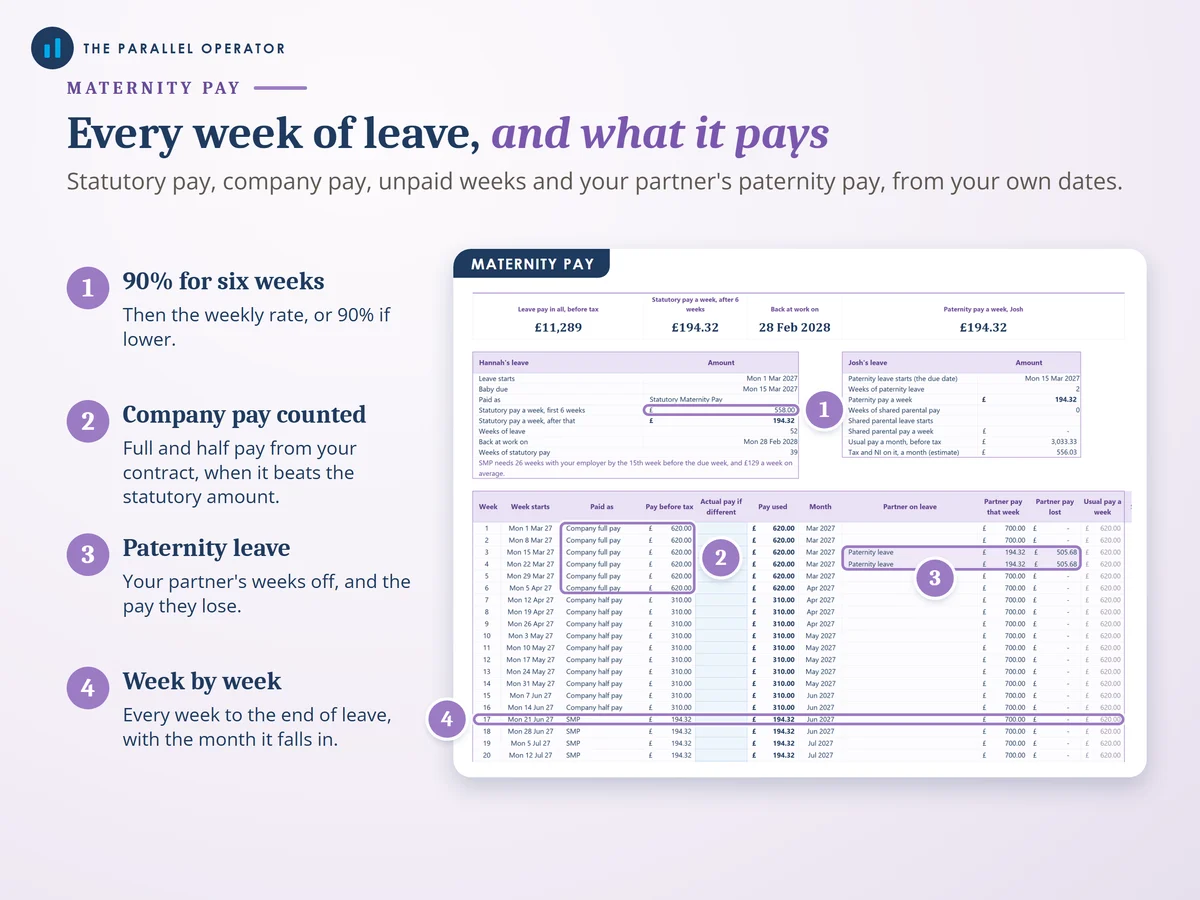
- Maternity pay, week by week90% of your average weekly pay for six weeks, then £194.32 a week or 90% if lower, to week 39. Company pay is counted whenever it pays more, and the unpaid weeks show before they arrive.
- Your partner counted tooPaternity pay at the statutory rate, the pay your partner gives up while on leave, and any weeks of shared parental pay moved between you.
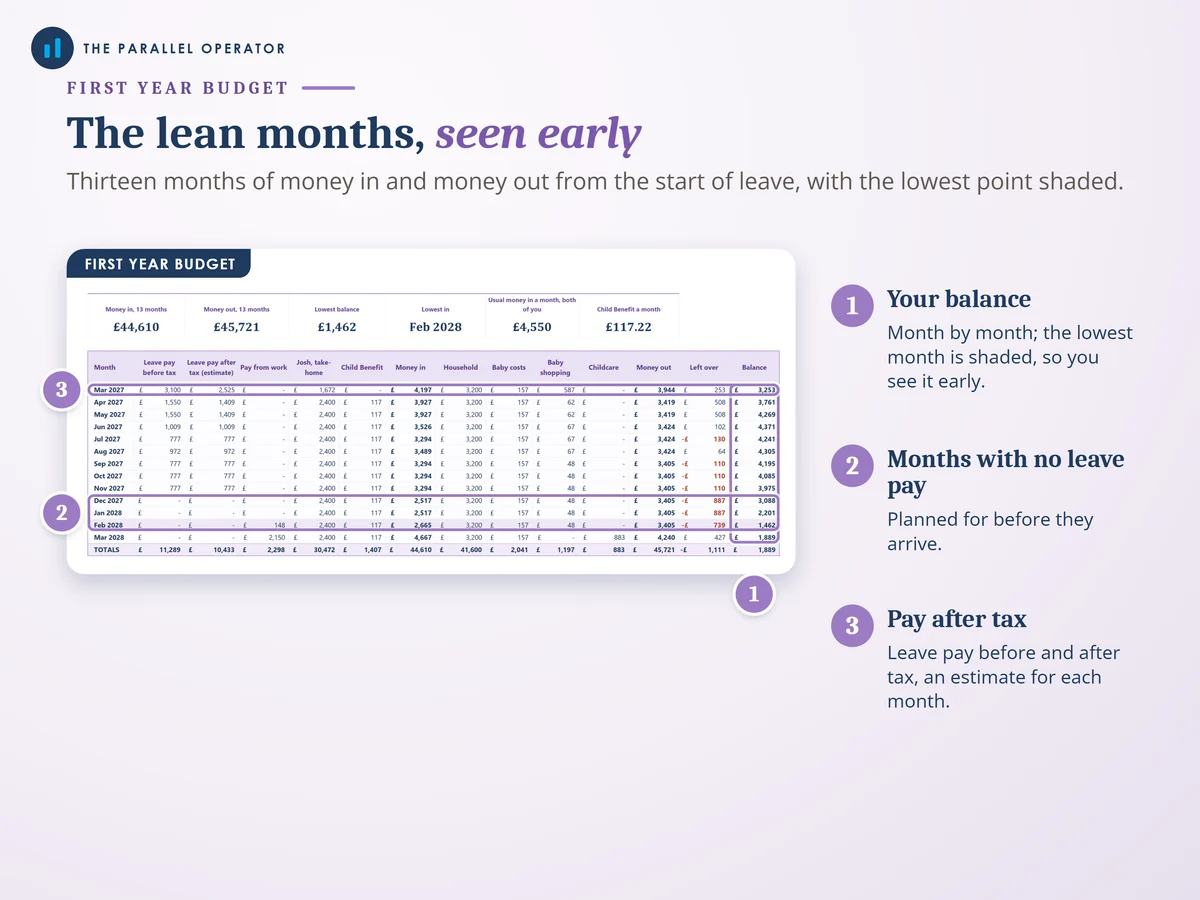
- The first year in poundsMoney in after tax, estimated, and money out, month by month, with your lowest balance and the month it falls in.
- Child Benefit and childcare help£27.05 a week for a first child, the high income charge from £60,000, Tax-Free Childcare at £2 for every £8 you pay, and the funded hours where you live.
- Checklists you can printHospital bag and newborn lists on A4 in the PDF, and the same lists in the workbook to tick on screen.
How it works
- Type your dates and payOn Settings, the due date, when leave starts, your average weekly pay and any company maternity pay. Maternity pay fills in week by week
- Cost the first yearOn First year budget, your household costs, what you have put aside and any childcare
- Shop and packTick off the shopping list as you buy and pack the hospital bag list. The Dashboard shows the year at a glance
Who it is for
Expecting parents in the UK planning maternity leave and the first year with a baby, with a partner or on your own. If you are employed, you are usually paid Statutory Maternity Pay through your employer. If you are self-employed, you may get Maternity Allowance instead. The planner covers both.
Questions
Do I need Microsoft Excel?
No. It comes with a Google Sheets version, which is free with a Google account. The Excel file also opens in the free web version of Excel.
How do I get it?
Straight after payment it is in your library on this site: the Excel file, the 12 page PDF with the guide and checklists, and the Open me first page with the Google Sheets button.
I am self-employed. Does it work for me?
Yes. The Maternity pay tab covers Maternity Allowance for the self-employed as well as Statutory Maternity Pay, week by week.
What happens when the rates change?
Every rate is a cell on the Settings tab. When the rates change each April, type the new figures and every tab follows.
Is this financial or medical advice?
No. Pay, take-home and Child Benefit figures are estimates, and your employer and HMRC have the real figures. The checklists are practical packing help, and your midwife or maternity unit may give you their own list, so follow theirs.

Made by Izhar Shah. I built a brand in the evenings alongside a full-time engineering job, and in its first twelve months it passed £500,000 in sales. I make the sheets I wish I had when I started.
Works in
Instant access in your library after payment. Figures are estimates to help you plan, not financial or medical advice.